
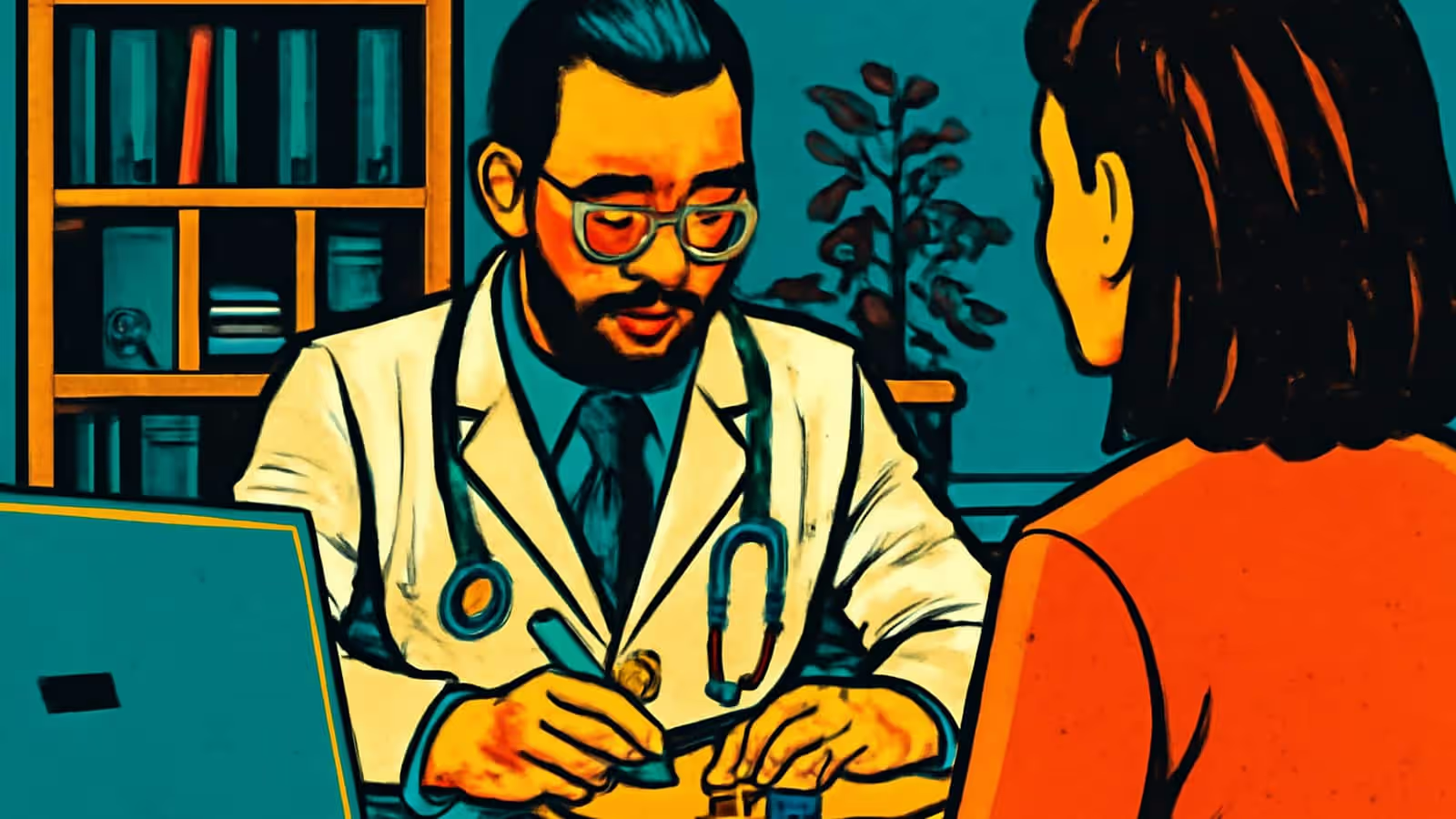
Interest in new antidepressants has never seemed higher, and for understandable reasons. Many people living with depression do not feel fully better on the first medicine they try, so it is natural to wonder what else exists and whether the latest depression medication might suit them better. If you have been searching for “new antidepressants 2026” or simply want to understand how treatment is changing, this guide offers a calm, balanced overview of where things stand, what newer options actually do, and why any decision about medication belongs with you and a qualified prescriber.
Why interest in new antidepressants is growing
Depression is common, and it affects people in different ways. Standard treatments help a great many people, yet a meaningful number do not respond fully to the first option they are offered, and some find the side effects hard to live with. [cipriani-2018-antidepressants] That gap is the main reason researchers keep exploring fresh approaches. If you are still learning about the condition itself, our overview of depression explains the common signs and the usual routes to treatment.
The established backbone: SSRIs and SNRIs
For many years, the first-line medicines for depression have been selective serotonin reuptake inhibitors (SSRIs) and serotonin and noradrenaline reuptake inhibitors (SNRIs). They work mainly by increasing the availability of certain chemical messengers in the brain, and they remain a sensible starting point for most people because they are well understood, widely available, and genuinely helpful for many. They usually take a few weeks to reach their full effect, which can feel slow when you are struggling.
How newer options are different
The phrase new antidepressants covers a broad and evolving picture, so it helps to think in terms of general directions rather than a single dramatic breakthrough.
Acting on different brain systems
Older and newer medicines both influence brain chemistry, but some of the more recent approaches act on different systems rather than serotonin alone. One area that has drawn considerable attention is the glutamate system, which is involved in how brain cells communicate and adapt. Esketamine, given under medical supervision, works through this route and is used in specific situations for depression that has not responded to other treatments.
Faster-acting approaches
A long-standing frustration with traditional antidepressants is the wait before they help. Some newer treatments aim to work more quickly. These rapid-acting options, again given under supervision, are an active area of development and tend to be relevant for particular circumstances rather than as an everyday first choice. [popova-2019-esketamine] There has also been progress for specific forms of depression: for postpartum depression, for example, a group of medicines known as neurosteroids has been developed that works differently from standard antidepressants and can act relatively quickly. As with every option here, these are used only on a doctor’s advice.
What “new” does and does not mean
It is worth holding realistic expectations. Newer does not automatically mean better for everyone, and a medicine that transforms one person’s recovery may do little for another. [carhart-harris-2021-psilocybin] Every antidepressant, old or new, can have side effects, and finding the right fit often involves some trial and error alongside your prescriber. This is normal and not a sign of failure. Dose adjustments, switching medicines, or combining treatments are all part of careful, individualised care.
When first-line treatment has not worked
When depression does not improve after trying at least a couple of suitable medicines at adequate doses, doctors sometimes call this treatment-resistant depression. If this matches your experience, it is important to know that options exist. A prescriber may review the diagnosis, consider other physical or life factors, adjust doses, switch medicines, add a second treatment, or consider some of the newer supervised approaches described above. Talking therapies and other established treatments also have a role. Feeling stuck is exhausting, but a limited response to early options does not mean that nothing will help.
Talking to your doctor
Any decision about starting, changing, or stopping an antidepressant should be made with a doctor or prescriber who knows your history. Medication choice is genuinely individual, and what works well for a friend or relative may not be right for you.
A few facts reassure many people. Antidepressants are not addictive in the way that some substances are, so they do not cause cravings or a compulsion to take more. Even so, they should not be stopped abruptly, because doing so can cause unpleasant discontinuation effects. If you want to come off them, your prescriber can help you lower the dose gradually and safely.
Medication is also rarely the whole picture. For many people it works best alongside talking therapy and everyday support such as sleep, movement, and connection. If you are unsure how heavy your symptoms feel right now, a depression self-assessment can be a useful way to prepare for a conversation with your doctor.
A schematic of the differences described in this article. Not head-to-head trial results.
When to seek help
Reach out to a health professional if low mood, loss of interest, hopelessness, or changes in sleep or appetite last for more than two weeks or interfere with daily life. Seek help sooner if symptoms are severe or worsening quickly. Exploring our other self-assessment tools may also help you notice patterns worth sharing with a professional.
If you ever have thoughts of harming yourself or feel unable to stay safe, please treat it as urgent. Contact your local emergency services, go to your nearest emergency department, or reach a crisis helpline straight away. You deserve support, and help is available.
How MyFreud can help
MyFreud can help you take practical steps alongside any medical treatment. As an AI mental-wellbeing coach app, it offers daily mood tracking, private journaling, and short guided coaching sessions that draw on evidence-based techniques, so you can watch how your mood shifts over time and share those patterns with your prescriber. Keeping up these small habits can support the therapy side of your recovery and help you feel more in control. MyFreud can sit comfortably alongside your medical care.
Download MyFreud and start today: App Store or Google Play.