
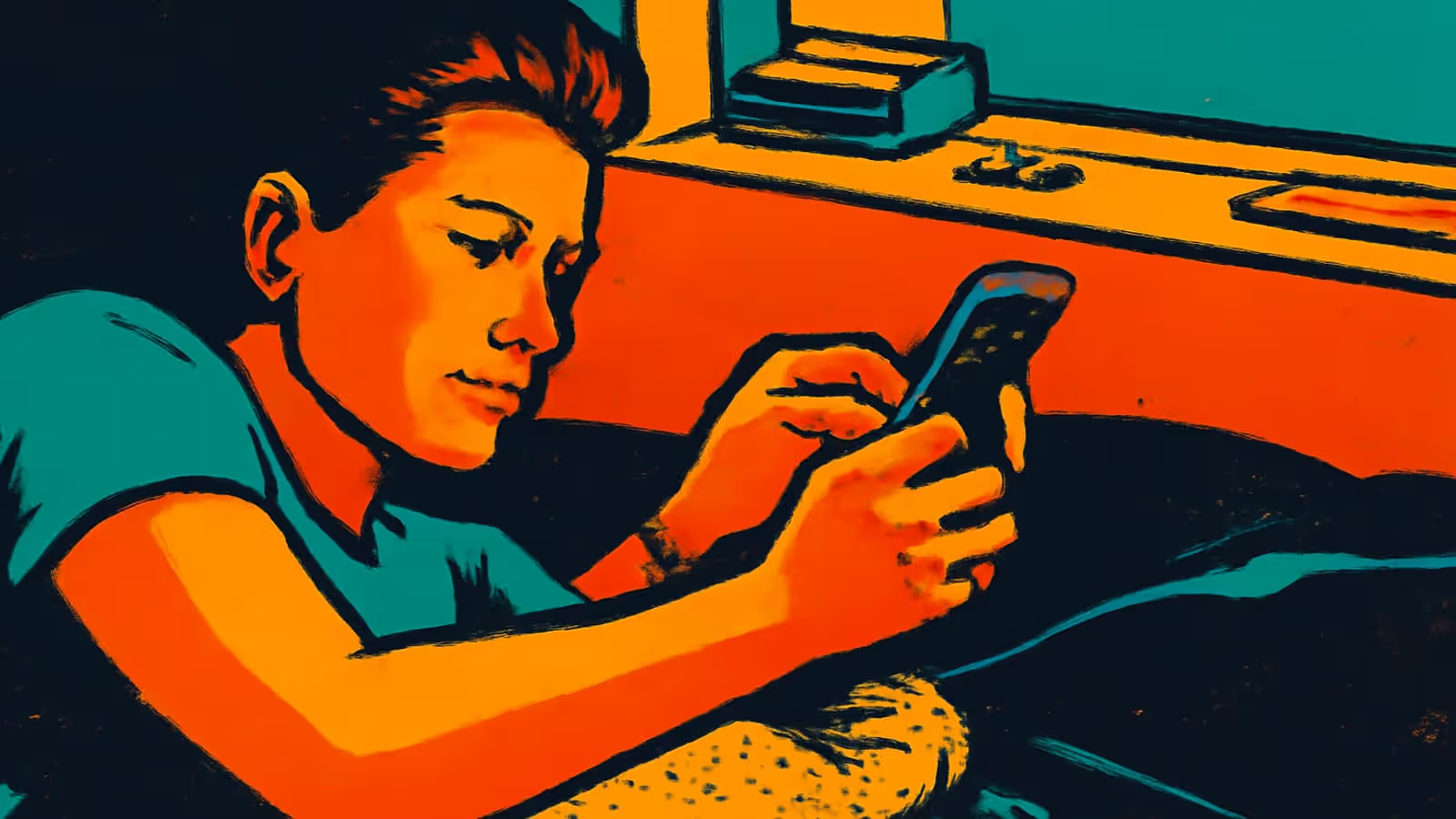
Doomscrolling and mental health are tightly linked, and if you have ever looked up from your phone after an hour of grim headlines feeling worse than when you started, you have felt it directly. Doomscrolling is the habit of compulsively consuming a stream of negative news and posts, often long past the point of being useful. It usually feels like staying informed or staying in control, but the research and most people’s lived experience point the same way: the longer it goes on, the more anxious it tends to make you. This guide explains why it happens, shows the pattern with a couple of simple interactive charts, and offers practical ways to break the cycle without switching off from the world.
Why we doomscroll
Two forces combine to make doomscrolling so sticky. The first is the brain’s negativity bias: we are wired to pay extra attention to threats, because for our ancestors, missing a danger was far more costly than a false alarm. Bad news is simply more magnetic than good news. The second is the design of modern feeds, an endless, unpredictable stream that never resolves and always offers one more update. Seeking information can also feel like doing something about a frightening situation, even when there is nothing to do, which quietly rewards the habit and keeps it running.
Put those together and you get a loop that is easy to fall into and hard to climb out of. It is not a failure of willpower. It is a predictable result of an ancient bias meeting a product built to hold your attention. The same pull is at work across short-video apps too, as we cover in TikTok and mental health.
What doomscrolling does over time
The key thing about doomscrolling is that it is dose-dependent within a single sitting. A quick check tends to be harmless; it is the long, spiralling session that does the damage. The chart below shows the shape of that pattern. The figures are illustrative, drawn to match the direction the research and clinical experience describe rather than exact measured values.
The shape of the within-session rise and the lingering after-effect described in research on distressing-news consumption. Levels are illustrative, not exact figures.
Notice two things. Anxiety tends to climb steadily the longer a session runs, and it does not simply vanish when you lock the phone. The unease often lingers for hours, colouring the rest of your day and, if the scrolling happened at night, your sleep. That after-effect is part of why doomscrolling feels so draining.
The common effects
- Anxiety and dread. A steady feed of threats keeps the body’s stress response switched on, so worry builds and rarely resolves. [apa-stress-2023]
- Poor sleep. Late-night scrolling delays sleep and fills the mind with alarming images right when it needs to wind down. See our guide to sleep.
- Helplessness. Most of the events are outside your control, so the worry has nowhere to go and can curdle into a sense that everything is hopeless.
- Rumination. The mind keeps replaying what it has seen, which deepens low mood and makes it harder to focus.
A balanced habit changes the picture
The encouraging part is that you do not have to choose between doomscrolling and burying your head in the sand. A balanced news habit, checking trusted sources at set times rather than grazing an endless feed all day, tends to lower distress across the board while keeping you genuinely informed. [reuters-dnr-2023] Toggle the chart below to compare.
Illustrative comparison of a compulsive versus a bounded news habit, based on the patterns described in the references below.
Staying informed matters, and caring about the world is healthy. The goal is to be a deliberate reader rather than a captive one.
Who is most affected
Doomscrolling can affect anyone, but it hits some people harder. Those already living with anxiety or low mood often find distressing content especially magnetic, and it feeds the very feelings that drew them in, forming a loop. People going through stressful periods, and those who scroll in bed, also tend to feel the effects more sharply. If that sounds like you, the habits below are worth taking seriously rather than treating as optional.
How to break the cycle
You do not need to quit the news. You need to put a frame around it. Where the feed you cannot leave is specifically political, the driver is a little different, and our piece on political anxiety covers which changes to the timing do most of the work.
- Set news windows. Choose one or two short times a day to catch up, and keep the rest of the day a scrolling-free zone.
- Use time limits. App timers and greyscale mode make the feed less compelling and help a session end on your terms.
- Protect your sleep. Keep the phone out of the bedroom and stop scrolling an hour before bed. This one change often lifts both mood and sleep.
- Curate your sources. Follow a few trusted outlets instead of an infinite feed, and mute accounts that leave you feeling worse.
- Pair worry with action. If a story matters to you, do one concrete thing, donate, volunteer, or contact a representative, then step away. Action drains helplessness in a way that scrolling never can.
- Notice how you feel. Check your mood before and after. Let that be the signal that tells you when to stop.
For the wider picture, our pillar on screen time and mental health covers why the average effect across all screen use is so small, and why that is a criticism of the measure rather than a reassurance.
When to seek help
If worry feels impossible to switch off, if it is disrupting your sleep or daily life, or if the news leaves you feeling persistently hopeless, it is worth reaching out. A doctor or mental health professional can help, and a short anxiety self-assessment or one of our other self-assessment tools can help you reflect first. If you ever feel unable to keep yourself safe, contact your local emergency services or a crisis line straight away.
How MyFreud can help
MyFreud can help you loosen the grip of the endless feed. Mood tracking shows you how scrolling actually affects you, so the cost becomes visible, private journaling gives worries a place to land instead of looping in your head, and short guided coaching sessions offer grounding and thought-reframing techniques to calm the stress response and step away with intention. It is a gentle, private companion for staying informed without being overwhelmed.
Download MyFreud and start today: App Store or Google Play.