
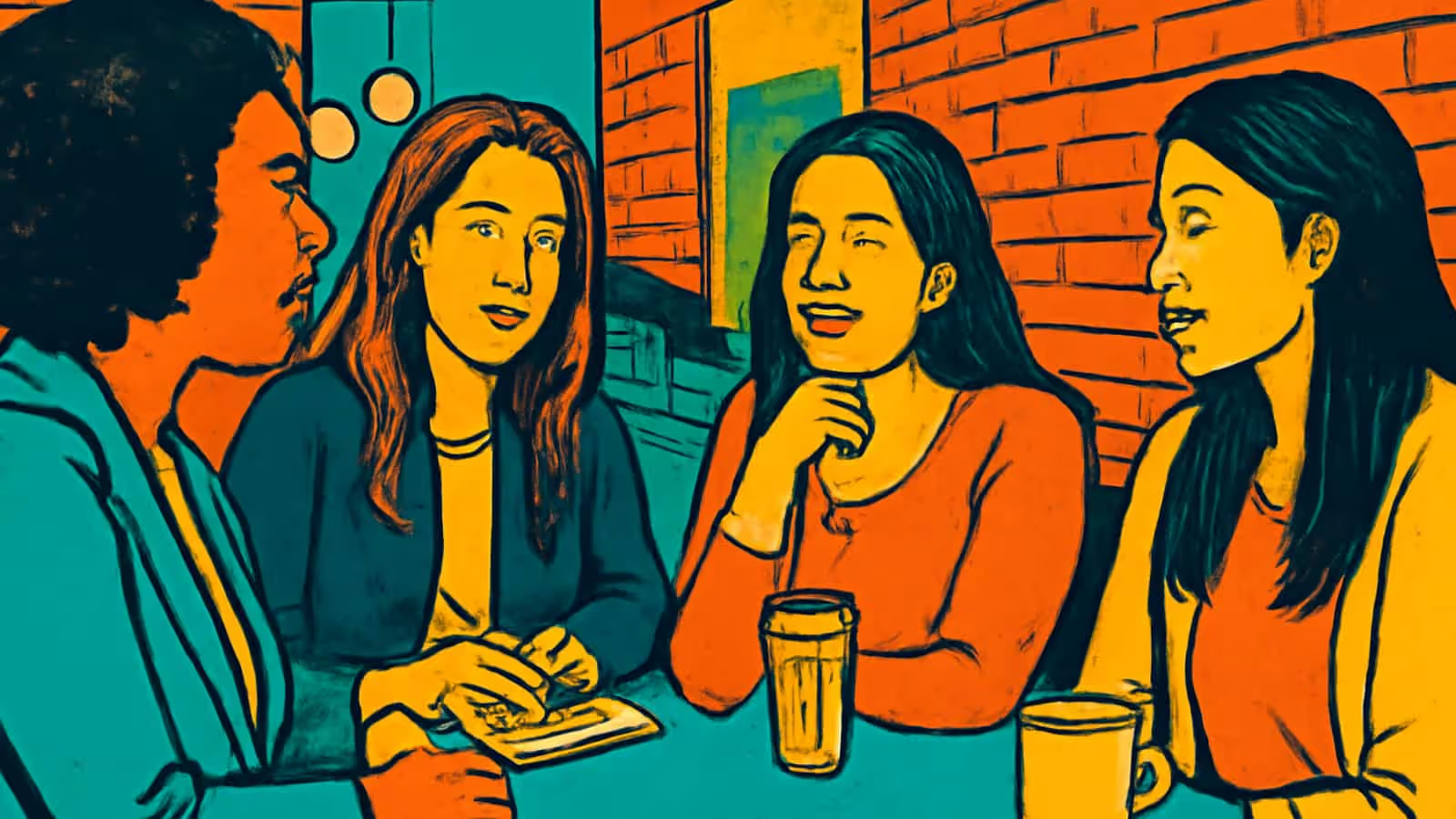
Detox is the part of alcohol treatment everyone pictures, and it is the part that does the least on its own. Getting through withdrawal is a medical problem with a medical answer. Staying stopped afterwards is a different problem, and a review published in Drug and alcohol dependence in 2026 puts a number on how much the psychological side of treatment contributes to it. [pubmed-addiction-2026-source]
What the researchers did
The team searched both English and Chinese research databases for controlled trials of psychosocial treatment for alcohol use disorder in China, and pooled what they found. Forty-eight studies met their criteria, covering 4,592 people, with roughly half receiving a structured psychological programme and half receiving routine care alone. Forty-four of the 48 had been published in Chinese, which is part of why this evidence had not been gathered up before.
Their main question was simple: how many people in each group returned to drinking. They also looked at anxiety and depression scores, since low mood is one of the most reliable triggers for relapse.
What they found
People who received a structured psychological programme relapsed substantially less often than those who did not. Anxiety and depression symptoms improved as well, and by a margin the authors described as large.
The consistency is worth more than any single number here. Forty-eight separate trials, run by different teams in different services, mostly pointing the same way, is a stronger signal than one impressive result.
How much weight to give it
Less than the headline suggests, and the authors say so themselves.
When they checked whether the published literature looked complete, it did not. The distribution of results was lopsided in the way you see when trials that found nothing quietly never got written up. That is an extremely common problem, and it is worse in fields where individual studies are small. The practical implication is that the pooled benefit should be read as a ceiling rather than an estimate.
Two other limits are worth naming. The trials were nearly all conducted in Chinese services, and drinking patterns, treatment systems and the stigma attached to seeking help differ enough between countries that the exact figures should not be transplanted. And “psychosocial intervention” covers a wide range of things, so the review can tell you that structured support helps more than no structured support, but not which programme to choose.
What this means in practice
If you or someone close to you is being treated for alcohol dependence, the useful question to ask a clinician is not whether therapy works but what structured support comes after the medical part. A detox with nothing organised to follow it is the arrangement this evidence argues against.
Is your drinking doing something for you?
Tick anything that has been true over the last few months.
0 of 6 ticked
This is the pattern where drinking has become a way of managing feeling rather than a thing you do for pleasure, and it tends to entrench rather than settle on its own. An appointment with a doctor is the right next step, and stopping suddenly without advice can be genuinely dangerous if you drink heavily every day.
None of these is alarming alone, but together they describe drinking that is doing a job. Try tracking what precedes a drink for two weeks. If the answer is usually a feeling rather than an occasion, that is the thing to address.
One item on its own says very little. If you came to this because you were wondering, that instinct is worth a second look in a few weeks.
The source
These findings are drawn from “Psychosocial interventions for alcohol use disorder in China: A systematic review and meta-analysis” (Kong X, Liu Y, Liu H, et al., 2026), published in Drug and alcohol dependence. Read the full study on PubMed.